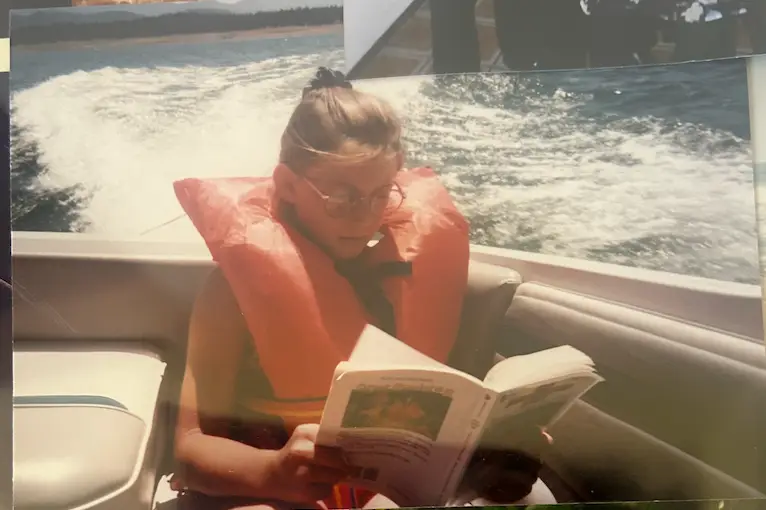
I’m a bit embarrassed to share that I spent my Bat Mitzvah prep years voraciously reading Jewish middle grade-novels about the Holocaust and writing a book report—for myself—on the strengths and weaknesses of this genre. Even more embarrassing, my original interest had been in finding middle-grade novels about the Spanish Inquisition, and unsurprisingly, in 1997, no such books existed. But that’s how much I loved reading, and still do. I have memories of reading on vacations to the beach, in the car on the way to dance class, and in my bed late at night, needing to know how a book would finish. Back then, I would toggle between multiple books at a time, though I now savor each book on its own.
Reading is such a part of my life that friends, colleagues, and acquaintances regularly ask me for recommendations, and everyone knows that if they ask me “What are you reading right now?” they will get a long-winded answer.
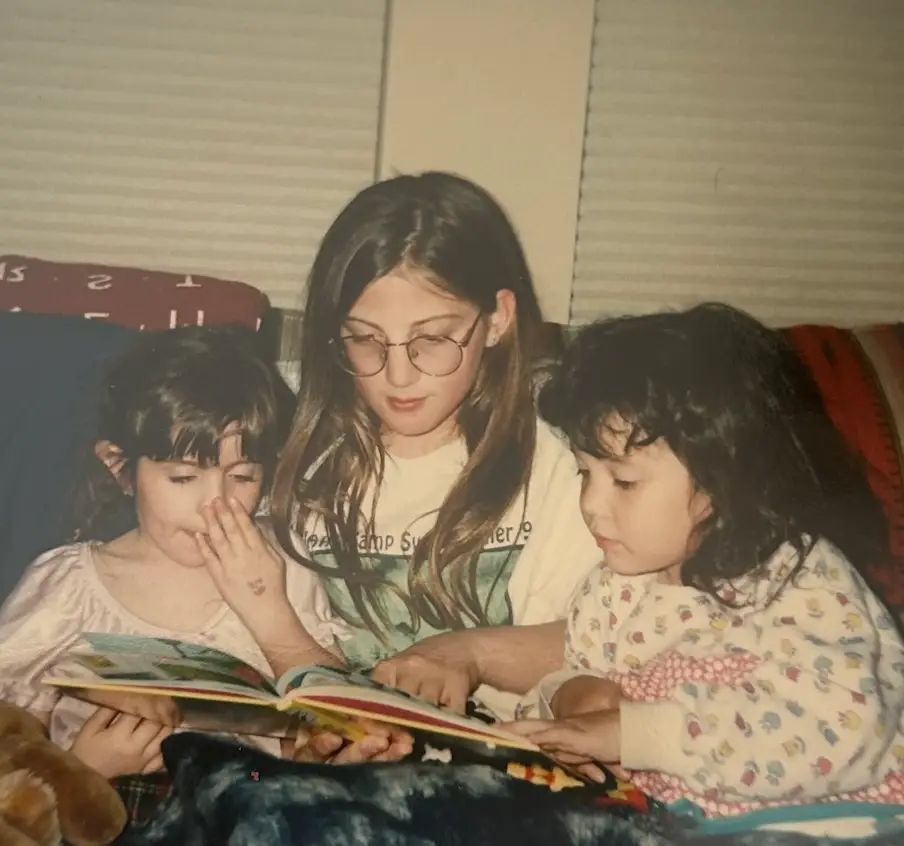
Well past my Bat Mitzvah era, reading Jewish books continues to be important to me. As an adult, I love reading books by Jewish authors (recent favorites include Happy New Years by Maya Arad and Boy from North Country by Sam Sussman), books with Jewish characters (such as Sisters of Fortune by Esther Chehebar and Homebound by Portia Elan), and Jewish memoirs (such as How to Share an Egg: A True Story of Hunger, Love, and Plenty by Bonnie Reichert and Returning: A Search for Home Across the Centuries by Nicholas Lemann). While I mostly read fiction, I also enjoy Jewish nonfiction, reading about a particular time period for the Jewish people (such as Melting Point: Family, Memory, and the Search for a Promised Land by Rachel Cockerell and The Light of Days by Judy Batalion).
Representation in the arts matters, and for me that means supporting Jewish authors and reading characters that feel familiar to me. It’s why I instantly subscribed to Nu Reads, a bi-monthly subscription box of new books by Jewish authors with Jewish themes, and why my library-holds list is full of books by Jewish authors.
Before I worked at M², I was a fellow in the 7th cohort of the Senior Educators Cohort. While I loved the entire experience, there was one moment when everything clicked for me. During our second immersive seminar, the focus of which was designing meaningful experiences, we ventured into Manhattan for a day-long program called “People of the Book.” Throughout the day, we visited sites around New York City, the cultural epicenter of the literary world, to spend time in both exclusively Jewish and extremely public places. We visited Hadar’s Beit Midrash before heading to Times Square and Bryant Park, and in each spot we thought about and experienced Torah in a powerful way. We explored what it means for Jews to be a “People of the Book,” connecting to the Jewish past, present, and future. The day had me experiencing M² at its best: the integration of the theory of experiential Jewish education with the practice of it.
What I loved about that People of the Book day, and what I appreciate about M² in general, is the way we interweave educational theory with practice and experience. During that seminar, we had been learning about different methodologies for making an experience pop, and that day in Manhattan, we experienced our learning in real life. As M²’s founder and CEO Shuki Taylor wrote in a recent article, Judaism should not be only something we know, but something we do. Jewish ideas gain meaning when they are intertwined in our lives in a meaningful way, and it is our duty as educators to help our learners experience Judaism, not just consume it. And to me, the same goes for reading. I find reading to be an experience, an opportunity to learn something new, explore a different world, and fully immerse myself in characters and their stories. A great book doesn’t end when I finish it; it stays with me and reshapes the way I live my life, even in the smallest of ways.
As summer continues and I am regularly able to go outside to take advantage of the good weather here in Chicago, I always bring a tote bag with me, with a book and my sunglasses, just in case I have a moment to read.
So, what are you reading now?
Rachel Hillman is a Senior Program Director at M². Earlier this month, she had the opportunity to moderate a book talk through the Jewish Book Council in Chicago.
This is the second in an occasional series of personal essays by M² staff members.